

More B2B buyers are using AI platforms such as ChatGPT, Microsoft Copilot, Gemini, Claude, and Perplexity to research solutions, compare providers, and answer questions before they ever visit a website or speak to a salesperson.
This shift has created a new opportunity for B2B technology companies through Generative Engine Optimisation (GEO), a strategy focused on creating content that AI platforms can easily trust and recommend.
Unlike traditional search engines, AI doesn’t simply return a list of websites. Instead, it analyses information from multiple trusted sources to generate an answer. That means businesses need to think differently about how they create content and focus on producing clear and valuable content that AI can confidently reference.
The good news is that you don’t need to completely rewrite your website to improve your visibility so, here’s a guide to optimise your content for AI search.
1. Answer Your Audience’s Questions Straight Away
As more buyers turn to AI platforms for guidance, businesses have an opportunity to position their expertise much earlier in the buying journey and the key is making answers easy to find.
When someone asks ChatGPT a question about AI adoption, cybersecurity, cloud migration, or digital transformation, the platform looks for content that provides a clear and direct answer. If your response is hidden halfway through an article, it’s much harder for AI to recognise and reference your expertise.
Leading with the answer before expanding on the detail makes your content easier for both readers and AI platforms to understand. Simply bringing the answer closer to the top of the page can often make a significant difference.
2. Create Content Around Real Customer Questions
One of the best sources of content ideas already exists inside your business for example: your sales teams, consultants, customer success managers, and technical specialists who speak to customers every day. Those conversations reveal exactly what buyers are searching for because they reflect genuine business challenges and the questions decision-makers want answered.
Think about questions such as:
- How can AI improve business operations?
- Is Microsoft Copilot worth the investment?
- How do we prepare for a cloud migration?
- What does a Zero Trust security strategy involve?
Content built around these real conversations is naturally more valuable for your audience and more relevant for AI search platforms. One conversation with your customer-facing teams could provide enough ideas for months of useful content.
Rather than trying to answer every possible question, choose a specific topic or solution and explore it in depth. For example, instead of writing about “Microsoft Security,” create a series of content around Microsoft Sentinel, Zero Trust, identity management, or Defender for Cloud. Building multiple pieces of content around a focused topic helps establish topical authority, making it easier for AI platforms to recognise your expertise and recommend your content.
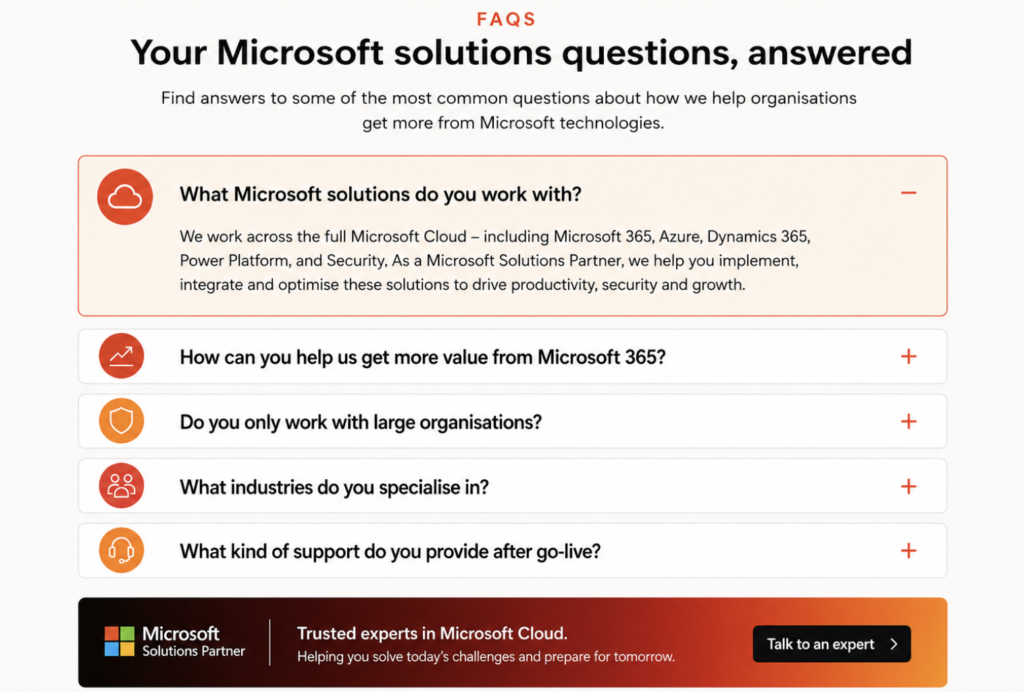
It’s also worth considering adding Frequently Asked Questions (FAQs) to your blogs, landing pages, and service pages. FAQs provide clear, direct answers to the questions buyers are already asking, making it easier for both visitors and AI platforms to quickly understand your expertise. They also help reinforce topical authority by demonstrating the depth of your knowledge in a format that’s easy to scan and reference. Here’s an example FAQs section to maximise discoverability.
3. Clearly Demonstrate Your Expertise
Many technology companies have years of experience delivering successful projects, but sometimes the challenge is making that expertise obvious.
We often see more generic statements such as “We help businesses transform through technology”, but these don’t typically provide much context for either buyers or AI platforms.
Instead, be specific about:
- The technologies you specialise in
- The industries you work with
- The outcomes you help customers achieve
The more clearly you communicate your expertise, the easier it becomes for AI platforms to understand your business and connect it with relevant buyer searches. Small changes to the way you describe your experience can make a surprisingly big difference.
4. Make Your Case Studies Easier to Understand
Customer success stories are some of the strongest trust signals you can publish because they help prospective buyers understand what you’ve achieved, and they also provide AI platforms with valuable context about your expertise.
A simple way to strengthen your case studies is by including a short summary that highlights:
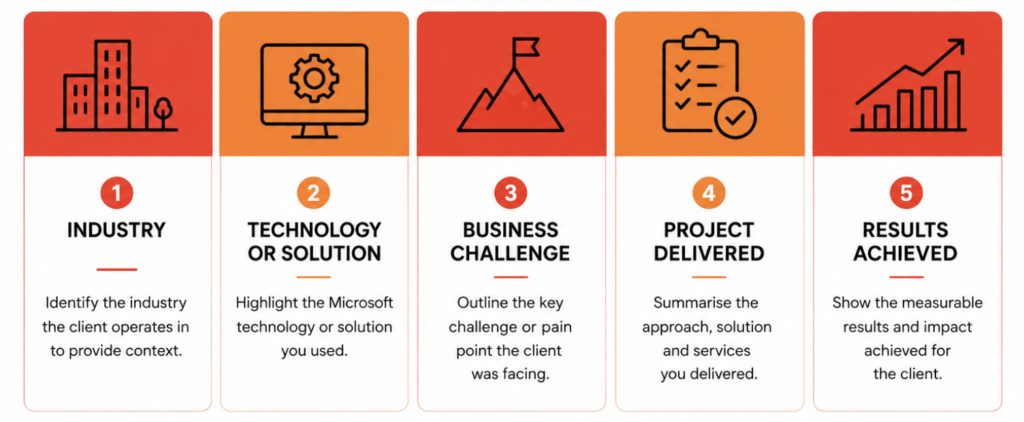
Adding a concise summary at the beginning of each case study makes it much easier for readers to understand the value you’ve delivered while also helping AI platforms identify the context of your expertise.
5. Keep Your Content Up to Date
One of the simplest ways to improve your visibility in AI search is by regularly reviewing and updating your existing content. Fresh, relevant information is more valuable for readers and more likely to be surfaced by AI platforms.
Rather than creating something completely new every week, consider updating existing content with:
- Current statistics
- Technology announcements
- Customer success stories
- New industry insights
Regularly refreshing your highest-performing content can often have a bigger impact than continually publishing brand-new articles.
Conclusion
AI search is becoming an increasingly important part of how B2B buyers research technology solutions and businesses that create clear, trustworthy, and genuinely helpful content will be in a much stronger position as AI continues to influence the buying journey.
Most organisations already have the expertise their audience is looking for, the opportunity now is presenting that knowledge in a way that’s easy to discover and trust.
Optimising your content for AI search will make your expertise more accessible to the people searching for answers, wherever they choose to look.
Frequently Asked Questions
What is Generative Engine Optimisation (GEO)?
Generative Engine Optimisation (GEO) is the practice of creating content that AI-powered search tools like ChatGPT, Microsoft Copilot, Gemini and Perplexity can easily understand, reference and recommend. Rather than focusing solely on traditional search rankings, GEO helps ensure your expertise appears in AI-generated answers.
How is GEO different from SEO?
SEO focuses on improving your visibility in traditional search engines such as Google. GEO builds on many of those same best practices but also considers how AI models interpret, summarise and cite content. This means creating clear, trustworthy, well-structured content that directly answers customer questions and demonstrates expertise.
Does GEO replace SEO?
No. GEO complements SEO rather than replacing it. Strong technical SEO, high-quality content and a well-structured website remain essential. GEO adds another layer by making your content easier for AI platforms to understand and surface when generating responses.
What type of content performs best for AI search?
Content that answers specific customer questions usually performs best. Practical guides, FAQs, case studies, industry insights and solution-focused articles all help establish authority. It’s also beneficial to build multiple pieces of content around a single topic rather than covering lots of unrelated subjects.
How can Microsoft partners improve their visibility in AI search?
Start by creating content around the questions your customers ask most often. Publish detailed service pages, helpful blogs, customer case studies and FAQs that demonstrate your expertise. The clearer and more relevant your content is, the easier it is for AI platforms to recognise your authority and recommend your business.
How long does it take to see results from GEO?
Like SEO, GEO is a long-term strategy rather than a quick fix. As you consistently publish high-quality, authoritative content and build topical expertise, you’re more likely to be referenced by AI search platforms over time. The key is consistency and focusing on genuinely helpful content rather than trying to optimise for algorithms alone.